
This is a story of Luciano IK2QPO (aka OE3ZLL and II2ANT); it tells how the Antarctic passion can even involve the Mayor of a city!
 I am Luciano IK2QPO (also OE3ZLL) and I live part in Milan, in the northern of Italy, and part in Pfaffstätten, a small town near Vienna, the capital city of Austria. Since I am interested in the Antarctic, every year in February I participate to the Antarctic Week as II2ANT WAP-Ø3Ø.
After many years, I succeeded in receiving the WADA and WACA awards, which I have hanged in my shack in Austria. One year ago, as it is custom in small towns in Austria, the Mayor of Pfaffstätten visited us to congratulate my wife for her 70th birthday (see pic aside). In my dining room there was a bottle of champagne and in the corner of my shack, the Antarctic awards hung on the wall. The mayor admired both, the champagne and my awards as well.
He asked me: “Are you an active radio amateur? Because if you have done many contacts with the Antarctic, you must be a very good radio amateur.”
“Yes, I am an experienced radio amateur” , I replied
He told to me: “I am Disaster Manager for Lower Austria and we would need radio amateurs for emergency communication. Would you like to become responsible for emergency communication in my town?”
“Yes, of course”, I answered “But not with this dipole (a dipole for 20 and 40m). For the WADA and WACA award I have used a better one. In Italy, I have a Yagi antenna and a longer dipole.”
He replied to me: “Well, then send me a request for the authorisation to install a good antenna which is also suitable for emergency communication and I will promptly authorize it. Since your amateur radio station is a station for emergency communication nobody can forbid it and your neighboors have to accept it because emergecy is a prority for everyone”
So now I have a 40 ft. high tower with a 6 element Yagi and 3 long wires for low band and emergency use.
TNX WADA and WACA … they really did help.
I hope to copy someone from Austria soon! 73 and good DX by OE3ZLL a.k.a IK2QPO & II2ANT
… and we congratulate Herr Christoph Kainz, the Mayor of the city of Pfaffstätten for his foresight; yes, Radio join the people and surely helps in emergency communications!
 Bellingshausen Station (WAP RUS-Ø1) is a Russian (formerly Soviet) Antarctic Station at Collins Harbour, on King George Island of the South Shetland Islands.
 Danilo Collino IZ1KHY (pic aside) will be involved in Antarctica till the end of February 2019, following several scientific missions and research projects, including remote camps.
 ation (WAP ITA-Ø1).
 will succeed and in this case the call could be IAØ/IZ1KHY from the Italians sites and eventually KC4/IZ1KHY, ZL5/IZ1KHY, HL8/IZ1KHY. At Concordia Station he will also use IAØ/IZ1KHY. On remote camps he will try to set some dipoles and be active SSB only (power 50-100W) as KC4/IZ1KHY/P.
 On October 21, 1921, a qualified group of radio amateurs ( the first on the air) met, in an assembly held in the auditorium of the newspaper “La Prensa”, did found the Radio Club Argentino, which historically became the third Radio Club in the world ,
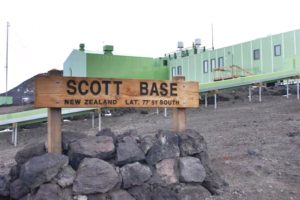
 Antarctica New Zealand staff were scheduled to fly south on October 1 to set up Scott Base (WAP NZL-ØØ1) for the summer science season ahead, but wild winds and snow closed the McMurdo Sound airfields, causing the longest delay in decades to the start of the season.
 The new science season at Antarctica is just a few days away from opening and NIWA researchers are busy packing containers and shipping them to the ice where they will be reunited with them in the coming months.
 Last week, a team of physicists from the Pennsylvania State University did publish an interesting theory about the origin of that cosmic radiation that seems to be originated in our own planet. If that theory proves to be true, what emits the ice of Antarctica is a new type of particle that goes completely out of the current standard model of physics and would demonstrate the validity of the supersymmetry model.
 Rothera Station (WAP GBR-12) 67° 34’ Ø3” South, 68° Ø7’ 47” East, is the BAS logistics centre for theAntarctic and home to well-equipped biological laboratories and facilities for a wide range of research. The station is situated on a rock and raised beach promontory at the southern extremity of Wormald Ice Piedmont, South-Eastern Adelaide Island.
 Lee operates barefoot, just 100 Watts but he has just started to be on air all bands CW and SSB; he will stay at King Sejong Base until the end of December.
 Eating outside can be one of life’s great joys, but it’s a whole different story when you live in Antarctica.The scientists working at Concordia Station (aka Dome C-WAP MNB-Ø3), one of the most remote places on Earth at around 1,000 miles from the Geographical South Pole, rarely get that pleasure with temperatures dipping as low as -80°C in winter.
 Construction is progressing on the RRS Sir David Attenborough one of the most advanced polar research vessels in the world. From 2019 onwards scientists researching oceans, ice and atmosphere will have access to state-of-the-art facilities on this floating multidisciplinary research platform.
 The XXXIV Italian Antarctic Campaign (2018-2019) has just begun few days ago. Mario Zucchelli Station (WAP ITA-Ø1) has been open and personnel is working on the outside to rebuild the air strip, waiting for the first airplane and then, the start of the summer campaign. The helicopters make a stop on one of the 3 equipped platforms, the light aircraft equipped with skis land on any flat snow-covered surface, the Hercules C-130 instead (with wheels) on a 3000 meter long seasonal track that is set on sea ice.
 Terra Vittoria, between Campbell and Drygalski glaciers. The coordinates of the station are: latitude 74° 41′ 42″ South, longitude 164° 07′ 23″ East.
 Some clips and photographs of a trip to South Georgia Island, Sub-Antarctic areas, in January, 2014 with the Oceanside Expeditions ship Plancius
 More than 26,000 years ago, sea level was much lower than it is today partly because the ice sheets that jut out from the continent of Antarctica were enormous and covered by grounded ice — ice that was fully attached to the seafloor. The ice sheets were as large as they could get and at the time, sea level was much lower because a lot of ice was sequestered on the continent. As the planet warmed, the ice sheets melted and contracted, and sea level began to rise.
 Casey Station (WAP AUS-Ø2) is significant as a transport hub for the Australian Antarctic Program, with the introduction of intercontinental jet flights for scientists and operational staff from Hobart to the Wilkins Ice Runway (WAP AUS-NEW), 65 kilometres (40 mi) inland from Cas
 Put your cover and the request letter in a larger envelope and mail it to the base or administrative organization.
 Remember that these bases are in the Southern Hemisphere: summer in the North when it’s winter in the South. During their winter months, access to most of these bases is nearly impossible so in most cases, mail will only be delivered during their summer.
 Organized by ARI Mondovì since its launching on 2003, WAP Meeting continue with no interruptions. WAPwebsite (thanks in particular to Floyd KK3Q) is giving the visitors (Hams, chasers, students) a chance to know more about the Icy Continet and the HF communication with people involved down there in scientific missions.
 In the future it will be probably hard to record new calls and new sites by Hams operating from Antarctica, simply because other communication systems are supplanting HF contacts between amateur radio operators, rather than propagation studies and Radio experiments,
 can vary; some are permanent structures used during the annual Antarctic summer, whereas others are little more than tents used to support short term activities. Field camps are used for many things, from logistics (Sky Blu, WAP GBR-NEW) to dedicated scientific research such as WAIS Divide Field Camp, WAP USA-34 located at 79° 28′ 03″ South, 112° 05′ 11″ West.
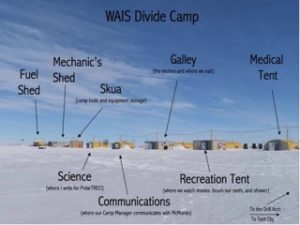 The deep coring started in the 2006/2007 season using the Deep Ice Sheet Coring (DISC) drill developed and operated by the Ice Drilling Design and Operations group at the University of Wisconsin, Madison. The coring was stopped in December 2011 at a depth of 3,405 m, which is ~ 50 m above the bottom of the ice sheet. The last 50 m of ice was left in place to provide a barrier between the borehole and the pristine aqueous basal environment. The ice at the bottom of the hole fell as snow 67,748 years ago. In the 2012-2013 season additional core was collected in zones of high scientific interest.
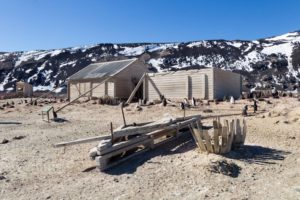 began his exploring career in 1894 by joining a Norwegian whaling expedition, during which he became one of the first persons to set foot on the Antarctic mainland. The first buildings erected by Carsten Borchgrevink at Cape Adare were prefabricated of pine by the Norwegian factory Strømmen Trævarefabrikk. These huts are still standing, and the site is recognized internationally as a significant historic site.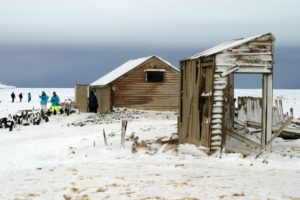
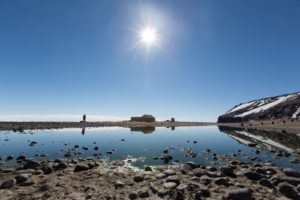 The Borchgrevink hut was designated by the Trust as Antarctic Specially Protected Area (ASPA) No. 159 in 2002. In June 2005 the Trust (the highest level of protection available under the terms of the Treaty), adopted a management plan for its future maintenance and accessibility.
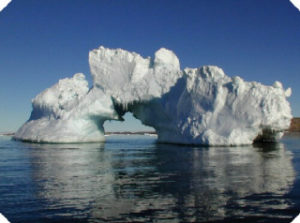 What do you do if you’re a fast-growing city in the desert with lots of thirsty people and little freshwater reserves? Park an iceberg off the coast.
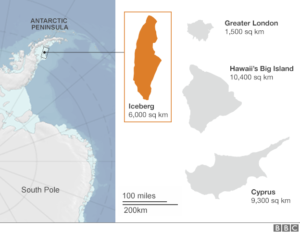 But now its southern end has swung round almost 90 degrees, indicating the berg has been caught in ocean currents.
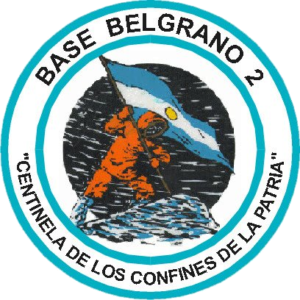 In the Argentinean Base Belgrano II (WAP ARG-Ø6), in the Land of Coats, there is a cave carved in the ice. It is the most southern place of religious worship on the planet, only 800 miles from the South Pole. The Catholic Chapel of “Our Lady of the Snows” serves the base throughout the year. Unlike the other temples that appear in this entrance, the Chapel of Our Lady of the Snows is dug in the ice instead of being a building to use.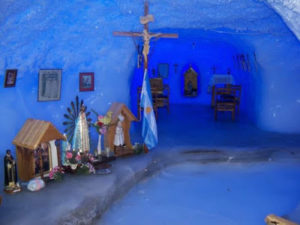

 experiments, low frequency radar and aurora studies for universities and other research groups.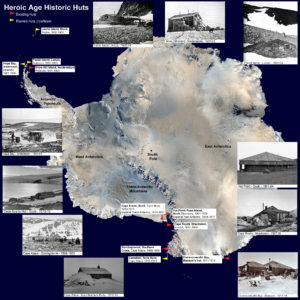
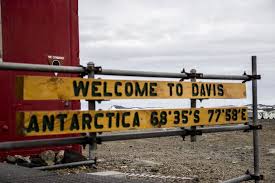 Matthew Gledhill, VK5HZ from a page set at QRZ,com informs that during the Antarctic summer 2018-2019 and Antarctic winter 2019 he will be working at Davis Station (WAP AUS-Ø3) signing VKØHZ.
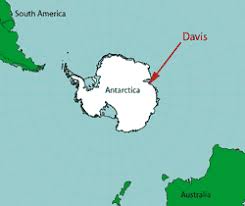 Davis Base is the most southerly Australian Antarctic Station and is situated 2250 nautical miles South-South-West of Perth, on the coast of the ice-free Vestfold Hills, Ingrid Christensen Coast of Princess Elizabeth Land, East Antarctica, in the Australian Antarctic Territory at 68° 34′ 36″ South, 77° 58′ 03″ East, Grid MC81xk
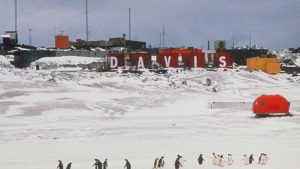 k the event. The Base was named after Antarctic legend, John King Davis, captain of the ships Aurora (1911–14) and Discovery (1929–31). used by Douglas Mawson on his expeditions.
 With sincere regret, we learn that Mr. Peter Short VP8WA of Port
 Stanley, Falkland Islands, became a SK 2 weeks ago.
 I was the QSL manager for all, but Bob VP8PL and still have the logsfor the following VP8’s: VP8PU, VP8QG, VP8WA, VP8ZV, VP8NJ, VP8QJ and VP8BZL.
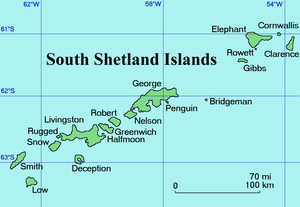 Monday 27 Aug at 20:09:24 a moderate magnitude earthquake at a depth of 64.0 km in open waters did strike the South Shetland Islands, Antarctica. Epicenter latitude/longitude was 61.85° South, 58.5° West
 The Australian Antarctic Division has paid tribute to a former Chief Scientist, Professor Patrick (Pat) Quilty AM, who died on Sunday (26 August). Professor Quilty led the Division’s science program for more than 18 years from 1980–1999 and published more than 200 scientific papers.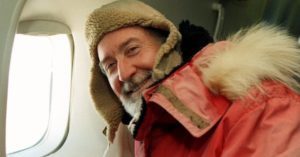
 contribution to Antarctic science.
 Thanks to our HAM friend Juan Manuel Pereda LU4CJM, this post reflects the worries that rise to world level!
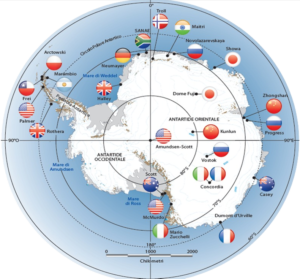 year-long leadership scheme culminating in an Antarctic voyage.
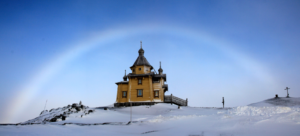 Spring is coming in Antarctica; rainbow above Holy Trinity Church at Bellingshausen Station (WAP RUS-Ø1), King George Island; world’s southernmost Russian Orthodox church.
 National Oceanic and Atmospheric Administration scientists have tracked krill populations in the southern oceans for years, but for the first time, they plan to use autonomous computer-driven drones to help with the basic research.
 WAP joins the day of National mourning for the victims of the collapse of the Morandi highway bridge in Genoa.
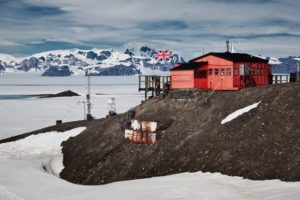 Fossil Bluff lies at the foot of a scree-covered ridge overlooking George VI Sound, which separates mountainous Alexander Island from Palmer Land.This small base located at 71° 20′ South, 68° 17′ West, was established on Alexander Island in 1961 with the purpose of Survey, geology, glaciology and field geophysics. This advanced station, occupied during the winters of 1961, 1962, 1969-75, supplied overland for field parties from Stonington Island (Station E) WAP GBR-Ø5, Adelaide (Station T) WAP GBR-13, and Rothera (Station R) WAP GBR-12. It was closed for the 1976 winter when Rothera (Station R) became fully operational, and now is a forward logistics facility with skiway
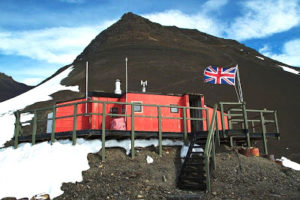 buildings and facilities, at the centre of which lies the main hut, named Bluebell Cottage, houses four people in comfort and forms a transit station for summer field parties
 The Snipe island 54 ° 57′ South, 67 ° 9′ West was involved into a military incident that took place between Chile and Argentina during 1958 as a result of a disputed border line in the Beagle Channel for the possession of that islet.
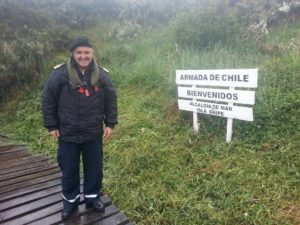 Actually, on this sub-Antarctic site there is a Navy outpost, a Meterological Station and a Lighthouse.
 The 2018 results of Arctic Challenge , Antarctic Challenge , Polar Challenge ( Arctic Ch + Antarctic Ch ) are available online via :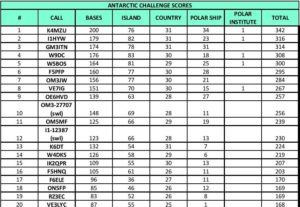
 to stimulate the radio contacts with these regions as well as with the Polar ships. This challenge is subdivided in the Antarctic Challenge and the Arctic Challenge.
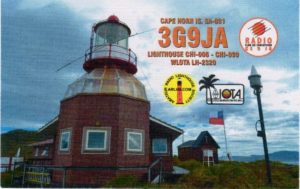 Just to resume the article of last August 1st (the 2016 operation from Hornos Island WAP CHL-2Ø), we are happy to show the QSL of 3G9JA just received by Bob K4MZU, who said: –Good news….very happy today I received QSL confirmation from Dagoberto CE5COX for 3G9JA-.
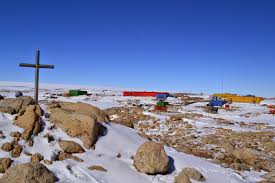 Today on all Australian Stations flags are flying at half mast in honour of Geoffrey Reeve who passed away at Casey in 1979. ( pic aside shows Casey Cross at Reeve’s Hill)
 Jesuit is the largest single order in the Catholic church, with more than 19,000 members by its own count, and a presence on every continent including Antarctica, where Jesuits have been chaplains and, in keeping with their order’s reputation as the church’s intellectual powerhouse, even scientists. Jesuits have a 60 year history in Antarctica. In 1951 a 27 year-old French Jesuit scholastic (seminarian) and here below are some of them:
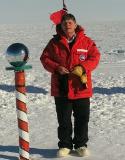 nging students in the classroom, all the while regaling everyone with stories of his adventures—particularly of his trip to Antarctica and his explorations at the bottom of the world
 Located at 55° 56’ 50” South, 67° 18’ 15” West, Horn Island Meteo Station did enter the WAP-WADA Directory as WAP CHL-2Ø, following the operation of 3G9JA operated in February 2016 (see
 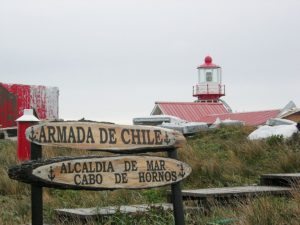 either by land or sea), but on another land point about one mile east-northeast.
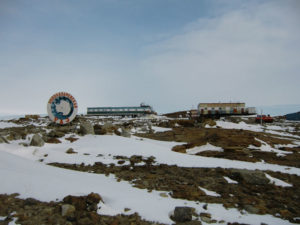 Timofeyev, R3IW will be active on HF Bands mostly on Digi modes as RI1ANW from Novolazarevskaya Station (WAP RUS-Ø9), Antarctica, until March 2019 together with RI1ANL (operated by RW6ACM).
 Antarctica (not from Bellingshausen Base WAP RUS-Ø1), so make sure to eventually allocate RI1ANF (2018) to Novolazarevskaya not to Bellingshausen.
 The pic below, shows L to R: EA5KB, CT4NH, IK1GPG, I1BSN, IK1HSS and the good friend Reg VE7IG.
 A scientific expedition will next year try to find the Endurance, the ill-fated ship of Antarctic explorer Sir Ernest Shackleton.
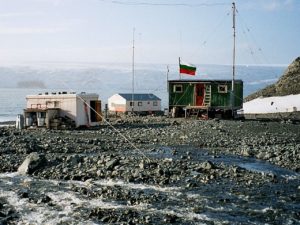 The Lame Dog Hut was erected in April 1988, at 62° 38′ 29″ South, 60° 21′ 53″ West and had been the main building of St. Kliment Ohridski Base until 1998. It is presently the oldest preserved building on Livingston Island, used as radio shack and post office, and hosting a museum exhibition of associated artefacts from the early Bulgarian science and logistic operations in Antarctica.
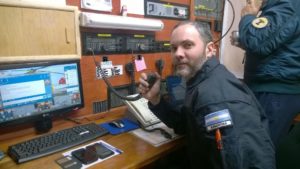 Hereby a couple of pics of Cristian Mauro Fabregat, LU4CMF, operator at Marambio Base as LU4ZS in a site with -50ºC and 100 km/h of Antarctic wind.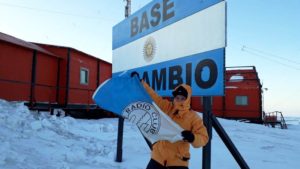
 our atmosphere. But that breakthrough was not entirely satisfying because those neutrinos had rained in uniformly across the sky: There was no indication of the specific objects that may have emitted them—no “point source.”
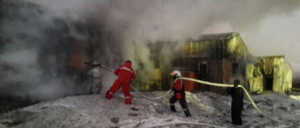 support maritime traffic, collaborate in search and rescue actions, control pollution, support evacuation actions, among other tasks.
 The INACH will send personnel to the area as soon as possible to evaluate the conditions of the Escudero Scientific Base, adjacent to the Maritime Governance. The collaboration between both bases allowed to give viability and safety conditions to the maritime activities of the Antarctic Scientific Expedition. The Bases of the INACH and the Maritime Governance shared since 2011 the use of a sewage treatment plant in order to meet the environmental commitments derived from the Madrid Protocol. The viability of its use should be defined with urgency, since Base Prof. Julio Escudero represents the main Chilean scientific base, with more than 250 scientists passing through it every summer season.
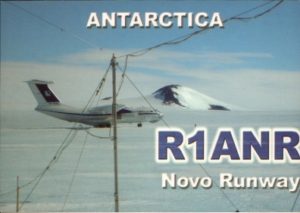 Making an HF contact into Antarctica is always a great DX! One of the very active spot on the Icy Continent is the Blue one Runway (or Novo Runway aka DROMLAN), an Airbase managed by ALCI (Antarctic Logistics Centre International) that works during the austral summer from late October to beginning of March, as a logistics service provider in the Dronning Maud Land Air Network (DROMLAN) since its inception in 2002. It offers a full range of services for the flights from Cape Town to Antarctica.
 In this very important site, Ham radio activity has never been left out. Three unforgettable operators; OlegSakharov ZS1ANF, Slava Savkin RD3MX and Alex Shmarin UA1PAW have been active from Novo Runway (70° 49’ 31” South, 11° 37’ 41” East) since 2007 giving thousands of Hams a real new one or a great DX, tying up their callsigns to the history of Radio communication from the Antarctic.