
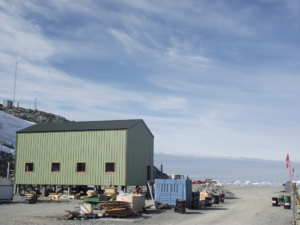
Dutch Ministry of Education, Culture and Science took the decision in 2010 to make the sum of six million euro available for research in Antarctica. On Sunday 27 January 2013, the Netherlands Organization for Scientific Research (NWO)  opened the first Dutch Laboratory in Antarctica and it has been placed near the British Rothera Research Station.
The lab is named after the sixteenth-century Dutch merchant, Dirck Gerritsz, probably the discoverer of Antarctica. The Dirck Gerritsz Laboratory (WAP NLD–NEW) consists of four sea containers that have been converted into laboratories and placed in a docking station.
In the laboratory Dutch scientists carry out research into Algae, Traces of iron in the warming Antarctic seawater, Freshwater flow 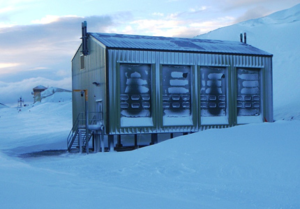 and climate change on the Antarctic Peninsula, study the influence of glacier melt water on marine microbial communities in Ryder Bay and Greenhouse gases.
The Netherlands is a signatory to the Antarctic Treaty and this is the reason behind the Netherlands’ Polar research program.
The South Pole is a unique research environment where the consequences of climate change can be measured in detail, without any human disruptions. The first five research projects did start at the Dirck Gerritsz Laboratory in the Antarctic summer of 2012-2013.
At the light of this evidence, the Dirck Gerritsz Laboratory Lat. 67°35’8″S, Long. 68°7’59″W on Adelaide Island, will be add to the WAP-WADA Directory (next issue
Jan. 2018) under WAP NLD-NEW.
As soon as some Hams will be active HF from there, a WAP reference will be issue.
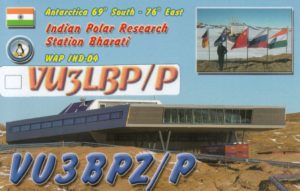
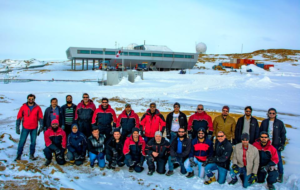 The 36th ISEA Team (Indian Scientific Expedition to Antarctica) at Bharati Station is almost at the end of its overwintering task, after a successful winter at 69° 24’ 28” South, 76° 11’ 14” East.
 but still no Europeans on his log.
 Base A now welcomes visitors to the site every Austral summer, in order to promote the work of the UKAHT on the Peninsula and in the UK and to give visitors a taste of base life from the early days of British occupation.
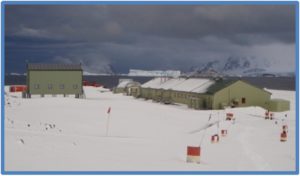
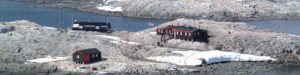 In the photos you can see the three buildings at Port Lockroy: Bransfield House, the Boat Shed and the Nissen Hut. In the distance you can also see the anemometer tower as well as the antenna mast (in 1957 Port Lockroy used to have eight antenna masts which were used for high frequency radio communication).
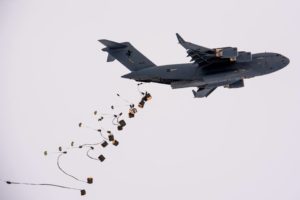 In a first for the Australian Antarctic Program, nine tonnes of cargo was parachuted from the back of a Royal Australian Airforce C-17A Globemaster III and on to the sea ice near Davis Research Station (WAP AUS-Ø3) on Sept.20-2017
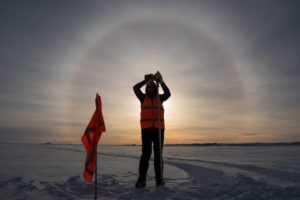 The pallets were ripped by the Australian Army’s 176 Air Dispatch Squadron.

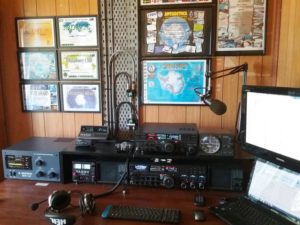
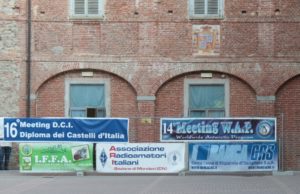 Great time this morning at the 14th WAP Meeting
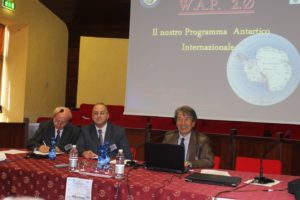
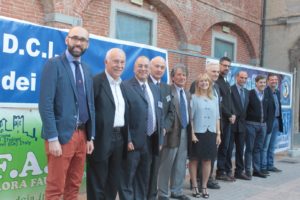 Authorities present: Luca Robaldo,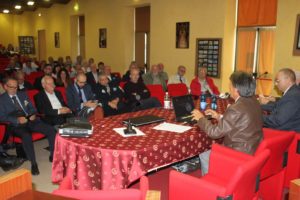
 Kirvanveggen Camp is listed on our WAP-WADA Directory and it was activated by Radio amateur (Callsign 7S8AAA) in the 90ties.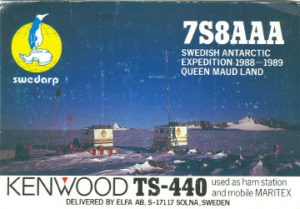
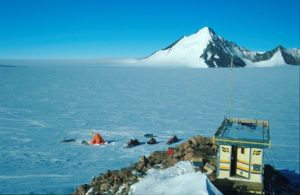 Just few notes about SVEA (WAP SVE-Ø2)
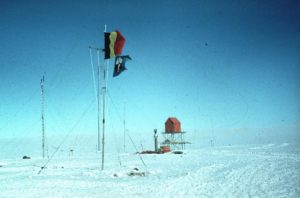 The third International Polar Year of 1958-1959 heralded the second important phase of the Belgian presence in Antarctica. This year was also known as the International Geophysical Year (IGY), in which not less than sixty-four nations signalled their commitment to study the physical characteristics of the earth.
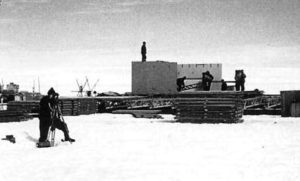 he Russians set up their Vostok Base at its least accessible point, the middle of the East-Antarctic icecap.
 ase has been reconstructed in 1964 and closed in February 1967.
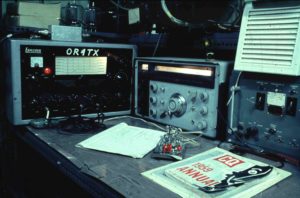 were: OR4KR, OR4OR, OR4RW, OR4TX, OR4TZ, OR4VN and OR5RK).
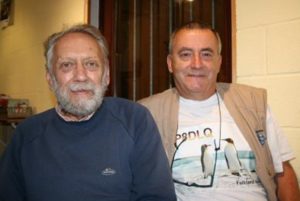 Our good friend Ghis ON5NT, went to see ON4TX/OR4TX personally at his Radioclub in Waterloo, near Brussels and Roger was extremely kind to give him the reminds that are part of his life. Pictures are from the 1960 Belgian expedition. (pic on the right: Roger ON4TX and Ghis ON5NT)
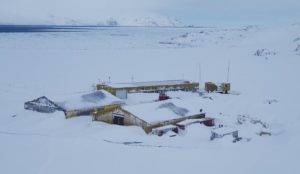 On the last 3 weeks Sebastian Gleich, SQ1SGB has been reported active from the Polish Antarctic Station Henryk Arctowski (WAP POL-Ø1) as HFØARC on 20 & 40 mts.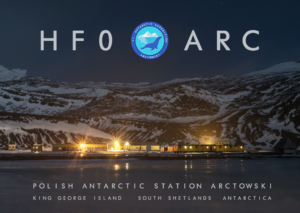
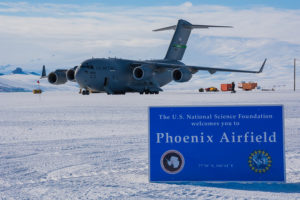 snow runway (WAP USA-NEW) has replaced Pegasus Field (WAP USA-42). This runway is capable of handling wheeled aircraft, that have included to date: Lockheed C-5 Galaxy, Lockheed C-141 Starlifter, Boeing C-17 Globemaster III, Lockheed C-130 Hercules and Lockheed P-3 Orion.
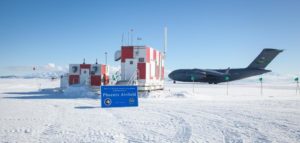 Ex Pegasus Field Runway (ICAO: NZPG) WAP USA-42
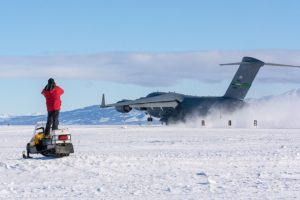 promise…it was developed originally as a “blue ice” runway (meaning that it consisted of long-term ice that was neither accumulating nor ablating). That condition is more actually applied to colder land-based inland locations such as Patriot Hills, rather than a warmer location on shelf ice.