
 On 23 January 1954, Argentine Navy personnel did inaugurate the Cabo Primavera Refuge (now Capitán Cobbett Naval Refuge) on a rocky promontory on Cape Primavera. Over many years this building was used by Argentine exploration expeditions to the area to collect Meteorology and Biology data.
On March 3, 1977, the Antarctic Command of the Argentine Army did inaugurate Base Primavera (see picture below) following the works to the Refuge and the construction of new buildings.
The Summer Capitán Cobbett Naval Refuge that serves Base Primavera, (WAP ARG-Ø9), is a small building that currently has the function of a laboratory; it has two rooms and a bathroom, and has supplies for three men for three months. The refuge was renovated, in March 2017, by a task force of the transport ship ARA Bahia San Blas
 A bit of history
The Naval Refuge “Cabo Primavera” has been established 70 years ago, (January 23, 1954), within the Argentine Antarctic sector, Costa Danco, Tierra de San Martín.
Located in Cierva Cove, in the Antarctic Peninsula at 64°9’17” South, 60°54’21” West, the Navy Refuge currently called “Capitán Cobbett”, in memory of the Navy Captain Enrique Cobbett, who lost his life in the shipwreck of the frigate Buenos Aires off Cape Horn, in August 1826. It happened when he was preparing to reinforce Admiral Brown’s squadron in combat with the imperial forces of Brazil.
At the light of the last information collected, Capitan Cobbett Refuge (aka Cabo Primavera Refuge) will be add to the WAP-WADA Directory as , in the waiting of a possible activation!
 Eric sent us a preview of the new QSL of TM1ANT expressly designed for the 2024’s AAW .
 In the summer of 1924 Ernst Krenkel went to Leningrad with what little money he had saved, hoping to find employment as the radio operator on any ship undertaking a long voyage. At that time, only specially designated Soviet vessels went on long voyages, and in Leningrad there were already qualified naval radio operators without work. Just when Krenkel had given up all hope of finding work he was told that the hydrographic management bureau was in urgent need of a radio operator prepared to go on any expedition, to any island in the Arctic ocean. There was little interest because the pay was poor and it was necessary to be away for the whole year, living in ‘hellish’ conditions.
 wearing his new naval uniform he set off by train to Arkhangelsk (Archangel). On arrival he was assigned to the “ Yugorski Shar “ which was preparing to take the relief crew to the first Soviet polar observatory “Matochkin Shar”, constructed the year before on the northern coast of the Matochkin Shar strait of the Novaya Zemlya archipelago.
 Ham radio was born in the USSR and Ernst Krenkel was delighted. Soon he was on-air using homebrew equipment, with the callsign EU2EQ (later U3AA).
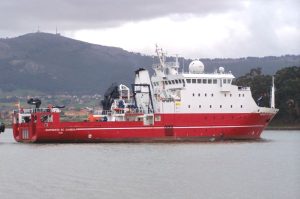 The Oceanographic Vessel (B/O) Sarmiento de Gamboa is a multidisciplinary research vessel with a global non-polar scope. Its instrumentation and laboratories allow it to carry out studies of global ocean circulation, marine biodiversity, fishery resources and climate change; It is also used to perform work in geology, marine geophysics, hydrography, physical and chemical oceanography, marine biology, resource estimation (fisheries), ocean monitoring with remotely operated vehicles (ROVs, AUVs, submarines, etc.), and deployment of underwater observatories (OBSEA, GEOSTAR)
 It also has the most advanced technologies in terms of navigation systems (for example, dynamic positioning) and is the first Spanish oceanographic vessel that can work with high-depth ROVs (Remote Operated Vehicles) and AUVs (Autonomous Underwater Vehicle).
 Kottas camp (74°12′ South, 9°44′ West) is a German Field Camp at Dronning Maud Land, Antarctica has been add to
 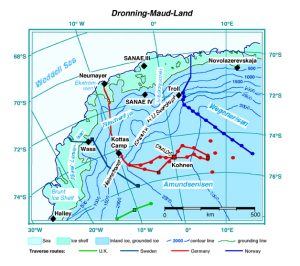 The 460km long stake line comprises approximately 950 stakes . It starts 10 km South of Neumayes at 70°41.83’ South, 8°26’24” West and ends after the crossing of Kottasberge at 74° 30’00” South, 9°13,09’ West.
 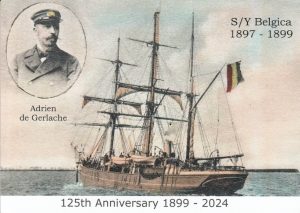 The Belgian Antarctic Expedition of 1897–1899 was the first expedition to winter in the Antarctic region. Led by Adrien de Gerlache de Gomery, it was the first Belgian Antarctic expedition and is considered the first expedition of the Heroic Age of Antarctic Exploration. Among its members were Frederick Cook and Roald Amundsen, explorers who would later attempt the respective conquests of the North and South Poles.
 S/Y Belgica did remain trapped in the ice for a long Antarctic winter.
 Edgeworth David Fied Camp (aka Edgeworth David Base) was established as a summer camp in 1986. Located at 66°14’59” South, 100°36’12” East , in the Northen Bunger Hills, Edgeworth David summer Base lies about 7 kilometres (4.3 mi) from WNW of Polish Antoni Dobrowolski Station (
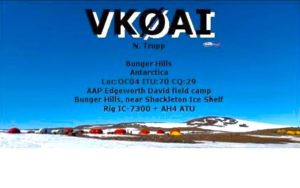 Edgeworth David Field Camp has been
 The twenty third edition (release 1.43) of
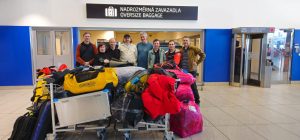 Few days ago, the Czech members of the Antarctic Expedition to Nelson Island were in Punta Arenas, Chile, waiting for a Brazilian ship to take them to their destination. That morning the host of
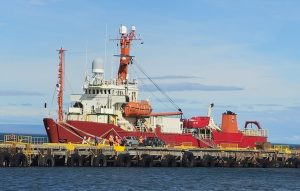 Antarctic Program, which will set sail this afternoon Jan 2nd 2024, heading Antarctica.