
 Ushuaia has grown by the sea but also under the watchful gaze of the prison. Both the Maritime, Antarctica and the Prison Museums bear witness to the passing of time in this southern land. While one tells the great adventures of seafarers, the other narrates the lives of those condemned to reclusion.
Facing the bay, within the Argentinian Navy venue, the building housing the Navy Museum was once the Recidivist Prison. Granted National Historical Monument by Congress in 1997, it bears witness to the origins of Ushuaia City.
At present, Marine and Antarctic Museum is directed by Dr. Carlos Pedro Vairo of a non-profit civil association with support from the local authorities and the Navy. It opens its doors to visitors who wish to know more about the history of the city.
A brochure with the location of the different rooms is handed out at the entrance. Guided visits are highly recommended and, while waiting for them to begin, visitors can walk through the first rooms devoted to the naval past of Tierra del Fuego. Just like the other southern islands, its development is closely tied to the sea, the only means of communication to the continent until 1948.
Created in 1994, the Museum has revalued the building of the former Presidio of Ushuaia. It began as a Maritime Museum, exhibiting a complete collection of naval models. It also houses an interesting collection on Antarctic Expeditions. It was declared National Historical Monument in April 1997. It was a good way to understand the early history of Ushuaia: the maritime history is very informative, particularly the Antarctic history; the penal colony and conditions of prisoners and the important native history of Tierra del Fuego and this is very well captured in the Yamana native exhibits.
The old prison itself is very well kept and is formatted in a very interesting way. Each cell containing a separate piece of history. Once stepping into the cell, the information begins. One can feel the hardship that the prisoners experienced in that cold place. The maritime exhibits are excellent as are the postal exhibits. The Antarctic exhibits are particularly gripping, bringing the rescue missions back to life.
Read more at: https://www.welcomeargentina.com/ushuaia/maritime-museum.html
 Two interesting Plaques for the Antarctic Trophies collectors!
 To get more on the Antarctica 2020 Trophy, issued to celebrate the 200 years of discovering Antarctica, see
  Camp Byers (Campamento Byers) is a Spanish seasonal base camp located at 62°39′49″South, 61°05′58″West on the south beaches of Byers Peninsula, in the western part of Livingston Island in the South Shetland Islands. The locality is also designated for use as an International Field Camp. When necessary for scientific research purposes, temporary camping is allowed elsewhere on the protected peninsula under certain conditions. The camp was installed to support the scientific research in the area during short periods of time. Due to the increasing interest in the area, the camp is still operative but can be easily dismantled when required. It is maintained by the personnel of Juan Carlos I station (WAP ESP-Ø1) who keep the camp in a good condition year by year. The camp consists in two fiber glass “melon huts” each of 6m x 2m in size, one set up for scientific research and the other for domestic activities. The camp is open to all the Parties.
 The main access is by ship or helicopter. Parties should liase with Spain, Spanish Polar Committee, to co-ordinate access to the melon huts.
 Antarctic biodiversity, and because of its high level of environmental protection, it has been very little affected by human activities. Finally, the proximity to the Spanish polar installations on Livingston Island and the experience derived from previous expeditions to the site make it logistically feasible as a site for ongoing monitoring and research.
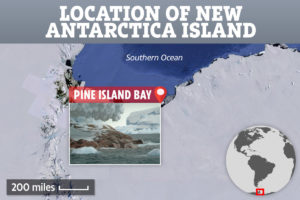 Sif Island is the name given to an island in of the Amundsen Sea, in Antarctica. It is 1,150 feet (350 m) long and made of volcanic granite. Scientists spotted this “uncharted island” earlier this year, but a NASA satellite has been tracking it since 2014, the United States Geological Survey (USGS) revealed.
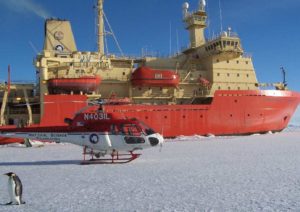 “I think I see rocks”, shouted an officer aboard the RV Nathaniel B. Palmer as the ship passed through Pine Island Bay, Antarctica. After consulting their charts, the crew realized they were looking at a brand-new island. There was a commotion as everyone onboard rushed to see the rocky, ice-covered
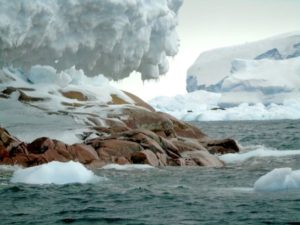 covered in ice, but rises from the sea with a layer of brown rock distinct from the surrounding glaciers and icebergs.
 Norbert (Bert) E. Yankielun did operate on 1999 as KC4/WA1O from Temporary Byrd Surface Camp using 100w, battery powered, Kenwood TS-50 inside of his tent.


 What follow, explains how the idea of carrying out a construction came up. Initially named “Casa de Botes Roberto Argentino Vallverdú” , later called “Casa de Botes Marambio” .
 Food wrapping, fishing gear and plastic waste continue to reach the Antarctic. Two new studies into how plastic debris is reaching sub-Antarctic islands are published last month of April 2020 in the journal Environment International.
 Beside Asuka Base (WAP JPN-Ø1) and Miizhuo (WAP JPN-Ø2) Showa or Syowa Station is the 3rd Japanese permanent research station in Antarctica. The fourth one is Dome Fuji (WAP JPN-Ø4).
 Well, the city of Imperia by the Ligurian Riviera (Italy) is waiting you next September 11, 12 and 13 2020 at the International Naval Museum of Western Liguria .
 Flavio Barbiero (pic aside) lives in Italy. He is a retired Admiral in the Italian Navy who last served with NATO. In addition He is an archaeological researcher in Israel as well as the author of several books, including “The Bible without secrets” and “The secret Society of Moses”.
 In his website, Flavio Barbiero describes the First Expedition to Antarctica by Renato Cepparo, with rare pics.
 Antarctic Veteran, Dr. Volker Strecke, DL8JDX has just received the