
LU4ZS, Marambio Antarctic Base Station (WAP ARG-21), operated by Cristian LU4CMF, will be on air from July 7 to July 15 in SSB and FT8 modes. Cristian will also join the participation in the annual event “The Argentine Republic in two days” this  weekend,and it will be managed by LU4AA, foreseeing an operation in 7 MHz band, SSB mode.
The contacts of this operation will be confirmed via LU4AA.
Facebook, Twitter and WhatsApp social will provide the followers with news and information
Here below, a more than shareable comment by Juan Manuel Pereda LU4CJM, aka operator at LU1ZI Carlini Station and to few of the very rare Argentine Refuges in Antarctica
Amateurs, media and institutions related to the radio around the world, contact me asking when LU1ZI Argentine Antarctic Base “Carlini” (WAP ARG-20), one of the “Most wanted contacts” at international level will be airing again.
How to explain to all these people that the “change of authorities”, the “lack of investments in equipments” and the ”lack of interest in the Ham radio activity” made the Argentine Scientific Bases in Antarctica disappearing from the Ham radio field?
Luckily there are people who carry on huge efforts to continue the activations from the white continent. Congratulations to the Marambio Base and to the Argentine Radio Club LU4AA for persisting to spread Argentine Antarctic Ham radio activity around the world.
Felicitaciones a la Base Marambio y al Radio Club Argentino por seguir difundiendo la actividad Antártica Argentina alrededor del mundo.
TNX LU4ZS, LU4CMF, LU4AA & LU4CJM
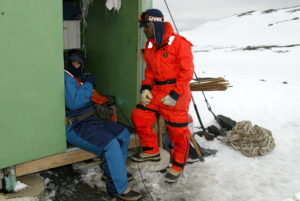 Refuge Emílio Goeldi (WAP BRA-Ø5) is a Brazilian Antarctic summer facility on Elephant Island . It was named after the Swiss-Brazilian naturalist and zoologist Emil Goeldi. The structure, built in 1988, can accommodate up to 6 scientists for up to 40 days and depends both logistically and administratively on Comandante Ferraz Station station (WAP BRA-Ø2).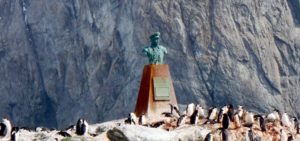
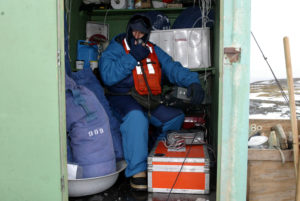
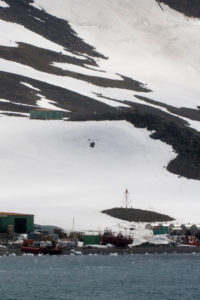 Located at 62° 5’ South, 58° 22’ West, Martel is an inlet forming the northeast head of Admiralty Bay on King George island, in the South Shetlands Islands, off Antarctica. It was charted in December 1909 by the Fourth French Antarctic Expedition under Jean Baptiste Charcot and named “Fiord Martel” after J.L. Martel, a French politician.
 The National Science Foundation (NSF) is accepting proposals from media professionals to visit Antarctica to report on research supported by NSF’s Office of Polar Programs (OPP) through the U.S. Antarctic Program (USAP).
 Microplastics and chemicals used in a range of household goods have found their way to Antarctica’s pristine waters and ice caps, research shows.
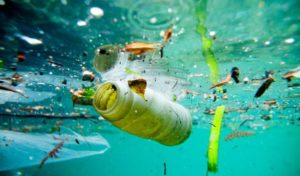 There is growing concern internationally about the increasing presence of polluting microplastics in waterways, with many countries having banned their use in cosmetic products.
 VI7ØMI is a Special Callsign issued to Commemorate 70 years of ANARE (Australian National Antarctic Research Expeditions) for Macquarie Island, which since 1947 have served Australia in the South polar regions. The first ANARE Expedition to Macquarie Island was in March 1947.
 sub-Antarctic Macquarie Island. Australia established its first stations in the sub-antarctic at Heard Island in December 1947 and Macquarie Island a few months later in March 1948.
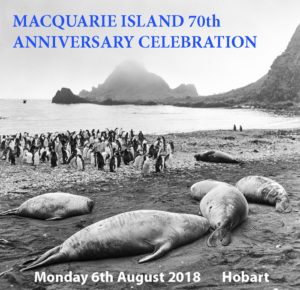 The Special event callsign VI7ØMI (WAP-293) is to commemorate the 70th Anniversary of the establishment of the first ANARE base at Macquarie Island, March 1948. The activity is to raise the profile of the Wireless Institute of Australia (WIA), Amateur Radio in general, ANARE, Parks Tasmania and the Antarctic Research programs globally and within Australia.
 Larry did a long time service for the stations in Antarctica; years ago Larry was very active in the 14.240 DX Group to keep contact with the operators down in the Icy Continent and also acting as official QSL manager for KC4USV, McMurdo (WAP USA-22), KC4AAA Amundsen-Scott South Pole Station (old WAP USA-21 and most recent rebuild WAP USA-36), and KC4AAC, Palmer Station (WAP USA-23).
 It was not until the British Graham Land Expedition of 1934–37 that Adelaide was confirmed to be an island separate from the Antarctic Peninsula. The Research Base at Adelaide Island referred to as Adelaide Base “T” (WAP- GBR-13) from July 1962, was established on 3 February 1961 on the South-West tip of the island. This was in preference to Rothera Point as it had a better skyway for aircraft and less sea ice to hinder access by ship. It was closed when the skyway deteriorated and operations were transferred to Rothera Station.
 The WSL Insitute for snow and Avalance Research SLF is organizing POLAR2018, which will take place in Davos, Switzerland from 15 – 26 June 2018.
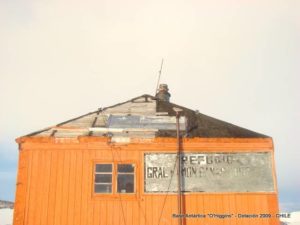 View Point was the location of the British research Station “V”. It was active intermittently with the intention of searching in the survey, meteorology and geology. Located on Duse Bay, Trinity Peninsula, at 63° 32′ 15″ South 57° 24′ 15″ West, the site was selected on 8 Feb 1953, foundations of first hut laid 3 June 1953. A second hut was erected on 20 Mar 1956 and called Seal-catcher’s Arms or View Point Hut ,
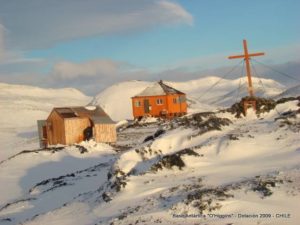 The refuge consists of a cabin enabled as a room and a second machine house, bathroom and storage. It is located about 50 km away from the Chilean base General Bernardo O’Higgins (WAP CHL-Ø2), on which it depends.
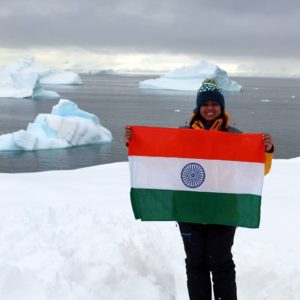 Prathyusha Parakala is the only one from AP and TS to be part of the ClimateForce: Antarctica (CFA) expedition 2018.
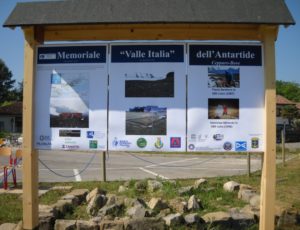 The tireless PH D Julius Fabbri IV3CCT did accomplish the mission to build a Memorial to recall the Giacomo Bove Base (WAP ITA-Ø2) in Antarctica and the 1st Italian Antarctic Expedition (Antarctic summer 1975-1976) led by Renato Cepparo, I1SR,
 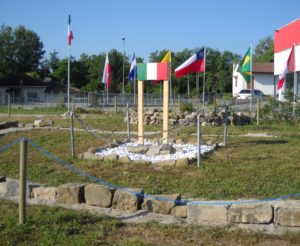 Following the laying of the foundation stone on February 24th 2018, last May 25 when the job was done, a nice ceremony was held at the “A. Malignani” High School of Cervignano (Udine); the inauguration of the Memorial, with Authorities and Students was a great moment of satisfaction even for the young students, Professors and all those who did help the construction of this Memorial which now a reality to be proud.
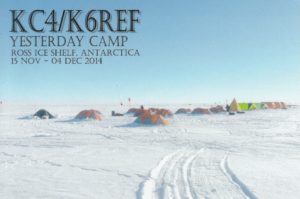 WAP and the Ham’s Antarctic Community are grateful to Dr. Ron E. Flick K6REF, for the New WAP Reference, USA-44 issued after his activity from the US Yesterday Camp.
 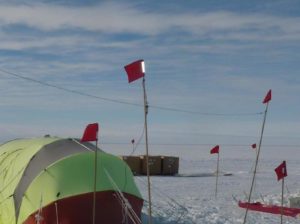 We camped at Yesterday Camp in amazingly cozy mountain tents for 19 days. We had several larger heated work and eating tents as well, and after a few days the cold didn’t seem so bad! The temperature was about -25°C (-13°F) when we arrived, gradually warming to a balmy -10°C (+14°F) by the time we left. We drank some beer outside once during a cold snap, and by the time I got half my can empty the rest was turning into frozen slush!
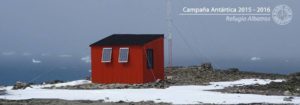 Antarctic shelters are facilities open to all countries, to be used in cases of emergency or to support activities in the field. They are equipped with food, fuel (there are with generators and communication equipment), accommodation facilities and other logistics. On King George Island (aka Isla 25 de Mayo), just to the South of Argentine Base Carlini ,WAP ARG-20 (ex Jubany Base) on Potter Peninsula there is a Special Protected Area (ASPA 132) which extends from Potter cove to Stranger point.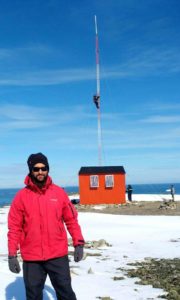
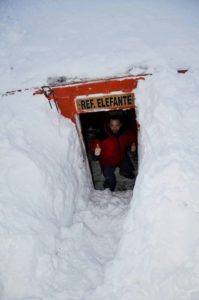 The refuge houses a repeater of analogue / digital VHF of the latest technology powered by solar energy that provides telecommunications support from radio frequency to all the scientific and logistical personnel in the
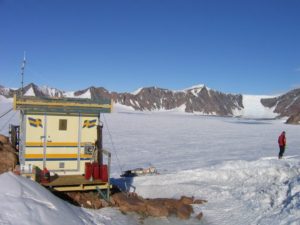 Svea is located in the Scharffenbergbotnen valley in the Heimefrontfjella mountain range, about 400 km from the coast. It was built during the 1987/88 Antarctic expedition and was the first Swedish research station in Antarctica since the Snow Hill station in 1901 and Maudheim in 1949.
 and is an excellent Base for small, transient research teams performing fieldwork in the area. The station, comprising two joined fibreglass modules, is about 12 m2 and has four beds and one pantry.
 The story of Japan’s involvement in the Antarctic goes back to 1955, when it announced at a special committee on the International Geophysical Year in Brussels that it planned to begin research in the region.
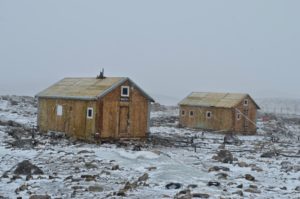 Nanda Devi Hut is a summer shelter in the area of the Indian Maitri Base (WAP IND-Ø3).
 Barton Refuge is a Hut of 3 by 3 mts with gas stove, food, water, dry clothing and dry boots. Located little East of Narebsky point at 62° 14’ 18” South, 58° 45’ 20” West, this Korean outfits is used as emergency shelter and for scientific purpose. Korea’s King Sejong Station (WAP KOR-Ø1) lies 2 km to the North-East.
 level.
 Students of the “Malignani Institute” reconstruct the basement perimeter of the Italian scientific outpost built in Antarctica in 1976 by the Cepparo’s Expedition. It’s called MAVI (Memoriale dell’Antartide “Valle Italia”, Cepparo-Bove) and it’s a Memorial to not forget . The Ministry of Cultural Heritage (MiBACT) is one of the sponsors of this “National Antarctic Memorial, Renato Cepparo”
 President of Adri-Antartica, Prof. Julius Fabbri, Ph.D. with the Cultural Association “ Adri-Antartica” in collaboration with the Municipality of Cervignano del Friuli (UD) and the School “Malignani 2000” member of the UNESCO network are pleased to announce the inauguration ceremony of the Antarctica “Valle Italia” (MANI), Cepparo-Bove, on Friday 25 May 2018 at the headquarters of the “A.Malignani” Technical Institute in Ramazzotti street , 41 – Cervignano del Friuli (Udine). The event falls into the National Competition of the MIUR “Future Present”, in agreement with UNESCO Youth – second edition –school year 2017/18
 DJØHO/MM has been confirmed as being located on the German icebreaker and Research Vessel R/V Polarstern!
 The Hut (67° 32′ South, 67° 12′ West) was built in 1957 and used as a satellite and advance base for survey and geological parties for personnel based at Horseshoe Island Station “Y” (WAP GBR-14). It was also used by parties from Detaille Island Station “W” (WAP GBR-26) and Stonington Island Station “E” (WAP GBR-Ø5). The sea ice around the island had proved unreliable during the previous two seasons, limiting the amount of sled travel and survey work that could be carried out from base.
 designated as Historic Site No. 63 under the Antarctic Treaty, 19 May 1995 (included with Horseshoe Island Station). The site has been cleaned up and minor repairs completed in Mar 1997.
 International Thwaites Glacier Collaboration will incorporate other nations’ research to time a potential collapse and assess implications for sea level rise, coastal infrastructure.
 search collaboration, called the International Thwaites Glacier Collaboration (ITGC), was announced at the British Antarctic Survey (BAS) headquarters in Cambridge, England. The collaboration’s scientists will begin their first research season in Antarctica in October 2018, establishing a logistical support structure for future work. The collaboration will continue until 2021.
 Yuri Sushkin N3QQ (aka UA9OPA) informs that next September 20-23rd 2018, several Radioamateurs will join the “RRC Anniversary meeting” in Orel, Russia, 200 miles from Moscow. A wonderful opportunity to have lot’s of fun and meet all RRC hard core guys!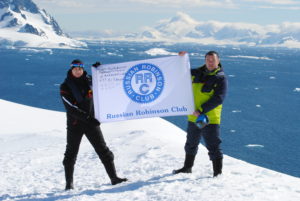
 Thanks to Bhagwati VU3BPZ and Rajesh VU3LBP, few envelopes are now coming at the end of the XXXVI Indian Scientific Expedition to Antarctica.
 collecting Antarctic stamps, Covers , Antarctic ship covers, Polarogrammes, or any other envelopes or post cards coming from Antarctica is undoubtedly a great satisfaction … same as receiving QSLs after an Ham Radio contact with an Antarctic Base!
 Norbet Trupp VK5MQ, is currently operating from Macquarie Island as VKØAI. He uses an Icom IC-7300 with vertical and has been already reported active on 20, 30, 40 & 80 mts bands in FT8 Mode.
 resent worldwide.
 Casey Research Station (WAP AUS-Ø2):
 Starting his career as a Certified Swiss Mountain Guide, Henry Perk acquired his commercial pilots license and Ham license while guiding in the Canadian Rockies.
 While in Antarctic each summer in the 1990’s Henry operated from many large and small locations as Siple Dome Station (WAP USA-18), Vostok Station (WAP RUS-13), WASA (WAP SVE-Ø4), ABOA (WAP FIN-Ø1), South Pole Station (WAP USA-21), McMurdo (WAP USA-22), Dome Charlie (WAP USA-Ø5), and many others.
 The iceberg graveyard in Petermann Bay in Antarctica provides plenty of opportunity for whales, seals, penguins and other seabirds to feed along. Wind and current have created an iceberg graveyard here. The ice groans and sighs. The icebergs crackle and sparkle, buck and roll in the brilliant sunlight, reflecting every shade of blue.
 On one of the thirteen Argentine Research Stations in Antarctica, Esperanza Base (WAP ARG-Ø4), we find the Chapel of San Francisco de Asís. The Esperanza base is inhabited all year round by civilians and is considered by the Argentines, as the southernmost city of the country, although it is only a small village. Besides the church, the base also has a school, a museum, a bar, a casino and a hospital with permanent maternity service and where enough Argentines have come to the world.
 The Post Office was part of the Research Base known as Dakshin Gangotri (WAP IND-Ø1). It was set up during the third Indian expedition to the Antarctic but after six years of rigorous service, the place was decommissioned. The whole place got buried under the heavy blanket snow and is now marked as a historical site. The Post Office became operational on February 24, 1984 and was part of multiple support systems at Dakshin Gangotri. The other facilities included an ice-melting plant, accommodation, recreation facilities, laboratories, storage, a clinic and a bank counter. The Dakshin Gangotri Post Office was established under the Department of Post Office at Goa on January 26, 1988. Scientist G. Sudhakar Rao was appointed as the first Honorary Postmaster. He had gone to the Antarctic as a member of the Seventh Indian Scientific Expedition in 1987. In the very first year of its foundation, almost 10,000 letters were posted and cancelled in the Dakshin Gangotri post office..
 Opened on February 6, 1955, Grussac Naval refuge (65° 10’ 33” South, 64° 08’ 10” West), on Petermann Island, was originally named to Hipólito Bouchard. , It takes its current name in homage to Paul Groussac (1848-1929), a French writer and historian based in Argentina and author of an allegation about the Argentine sovereignty of the Falkland Islands. Close to this Argentine naval refuge ( an old corrugated iron shack in rusted colors), lays a simple cross monument, an unreadable metal plaque with just one word “John” recalls the dead of a man of the British Antarctic Survey, who tried to get here over the sea ice in 1982..
 Faruk Ozlu said on Wednesday.
 A scientific expedition will next year try to find the Endurance, the ill-fated ship of Antarctic explorer Sir Ernest Shackleton. The vessel sank in 1915, crushed by sea-ice in the Weddell Sea and lost in 3,000m of water.
 Scientists in Antarctica have harvested their first crop of vegetables grown without earth, daylight or pesticides as part of a project designed to help astronauts cultivate fresh food on other planets.
 Indian Antarctic Program did start in 1981 with the first Indian expedition to Antarctica, a huge geo-political achievement. Dr. S Z Qasim, Secretary of Department of Environment and former Director of NIO was selected as the leader of the 21 member Team.
 carry out scientific work Dakshin Gangotri was built in eight weeks by an 81 member Team. With help from the Indian army they did complete the construction in January 1984.
 Great job is done by several worldwide Polar Philatelist Societies, just available on the web to learn and share the common interest in stamps, covers, and postal history. An interesting site with lots of links and information can be found here:
  Happy Easter from WAP Staff
 Born on 13th April 1994, Shri. Subhajit Sen did pass away on Tuesday the 27th March 2018 while at Indian convoy route to Maitri Station , Antarctica in service to the Nation.
 expected to return back home by April 2018. Through a competitive process, he was selected for the expedition based on his research project “Deformation – Fabric in Sub-glacial Till Exposed in Schirmacher Oasis”.
 With profound grief and sorrow we at the Indian Research Base, Maitri Antarctica and at National Centre for Antarctic and Ocean Research, Goa condole the death of Shri Subhajit Sen and pray to God almighty for his soul rests in peace and for strength courage and solace to the family.
 Officially opened on 20 March 1968; the US Palmer Research Station (WAP USA-23) on Anvers Island focuses primarily on Antarctic marine biology and zoology.
 Christianity was first established in Antarctica by Captain Aeneas Mackintosh who erected a cross on Wind Vane Hill in 1916. The first religious service was conducted in Antarctica in 1947 by William Menster with about 2,000 people from different Christian denominations in attendance. Research and whaling stations were erected in the large area of Antarctica in the early 1900s. Since then, several scientists are attending the area especially during summer while a few people stay over during winter. The extended stay in the region can be stressful and challenging for researchers. The Jesuit geophysicists have contributed to the growth of religion in the continent through Antarctica mission work. The religion in Antarctica dates back to the discovery of the continent in 18th century. However, Christianity was the first religious practice in the continent.

 entirely available online. It is an excellent testimony of the daily life conditions in Antarctica in 1950s in which clearly appear FB8AX (René Gros from 7mns10s to 8mns 00s then Mario Marret from 9mns53 to 57s).
 Volker Strecke DL8JDX is a great friend and an Antarctic veteran who did participate to several Antarctic Expeditions from 1988 through 1994.
 Nestled alongside Scott Base (WAP NZL-Ø1) in Antarctica, is Hillary’s Hut, a small building that’s played a big role in New Zealand’s history. Hillary’s Hut was the first building constructed at Scott Base. It was built by a team led by Sir Edmund Hillary in 1957 and it was from here that Sir Ed later led the historic expedition to the South Pole.
 Thanks to F8DVD, always present since the 1st edition of the Antarctic Activity Week, 15 years ago!
 Port Lockroy is situated on Goudier Island in the Palmer Archipelago (64°49’S – 63° 30’W) about 700 miles south of Argentina and Chile. The bay was discovered during Jean-Baptiste Charcot’s French Antarctic expedition in 1904 and was named after Edouard Lockroy, a French politician and Vice President of the Chamber of Deputies, who assisted the explorer in obtaining government funding for his expedition.
 The Argentine Ministry of Defense reports, by the Antarctic joint commander, Marine Commodore Pablo Fal that the crew of the Icebreaker Almirante Irízar rescued five US scientists who were stranded in Antarctica.
 request of the Argentine Foreign Ministry and went to Joinville Island to rescue the scientists.
 Francisco de Gurruchaga Antarctic Naval Refuge (62°14’03.0″ South, 59°10’02.0″ West), also known as Armonia Refuge or Harmony Haven has been recently referenced with WAP ARG-28 following the activity of Juan Manuel Pereda who did operate from there as LU4CJM/Z from Jan. 8th through 22nd 2017.